

Sourcing Soda Ash in Bulk: Grades, Suppliers, and What Buyers Should Know
Soda ash — the trade name for sodium carbonate (Na₂CO₃) — is one of the most broadly used industrial alkalis in manufacturing, water treatment, cleaning product formulation, and food processing. For procurement professionals and operations managers, it’s often a steady-consumption staple that needs to be sourced reliably, priced competitively, and received consistently on spec.
This guide is written for buyers: what you need to know about grades, domestic vs. imported supply, pricing dynamics, packaging options, and how to evaluate suppliers before you commit to a vendor relationship.
Quick Chemistry Recap
Sodium carbonate is a white alkaline powder or granule with a pH of around 11.6 in solution. It’s distinct from — and should not be confused with — sodium bicarbonate (baking soda, NaHCO₃) or sodium hydroxide (caustic soda, NaOH). Soda ash is stronger than baking soda but milder than caustic soda, which gives it a useful middle-ground position in many formulation and treatment applications.
Its core functions across industries are pH adjustment, alkalinity building, saponification support in cleaning chemistry, and flux action in glass manufacturing.
Where Soda Ash Comes From: Domestic vs. Imported Supply
This is one of the more strategically important sourcing considerations for U.S. buyers.
U.S. Natural Soda Ash (Trona-Based)
The United States sits on the world’s largest known deposits of trona ore, concentrated in the Green River Basin of Wyoming. Companies like Solvay, Genesis Alkali, Tronox, and OCI Wyoming mine and process trona into natural soda ash. This makes the U.S. one of the most cost-competitive and self-sufficient producers globally.
Natural soda ash mined from trona is generally considered:
- Lower carbon footprint than synthetic production routes
- Consistent purity with well-established QC processes
- Domestically available without the lead times and logistics risk of ocean freight
For buyers who prioritize supply chain resilience, ESG commitments, or “Made in USA” sourcing policies, domestic trona-based soda ash is the clear choice.
Synthetic / Imported Soda Ash
Much of the global supply outside the U.S. is produced via the Solvay process (synthetic), which uses salt, limestone, and ammonia. China is the world’s largest producer of synthetic soda ash and has historically been a significant export source. Imported soda ash can be price-competitive in certain market conditions, but buyers should factor in:
- Longer lead times and ocean freight variability
- Port congestion and import logistics risk
- Tariff exposure (particularly relevant given recent U.S. trade policy shifts affecting Chinese chemical imports)
- Potential purity and specification variability depending on the source facility
For most U.S. industrial buyers, domestic supply is the lower-risk and increasingly cost-competitive option.
Grade Selection: Getting the Spec Right
Choosing the wrong grade is one of the most common sourcing mistakes for buyers new to this chemical. Here’s what matters:
Dense vs. Light Soda Ash
Both are sodium carbonate — the chemistry is identical. The difference is physical form and bulk density:
| Property | Light Soda Ash | Dense Soda Ash |
|---|---|---|
| Bulk density | ~500 kg/m³ | ~1,000 kg/m³ |
| Particle form | Fine powder | Granular |
| Dustiness | Higher — PPE and ventilation more critical | Lower — easier to handle in bulk |
| Dissolution | Faster | Slightly slower, still very soluble |
| Typical applications | Chemical synthesis, detergent manufacturing | Water treatment, pool chemistry, general industrial |
Procurement tip: Dense soda ash is far more common in industrial purchasing because it’s easier to convey, store, and dose. Unless your process specifically requires fine powder dissolution speed, dense is usually the right call and often the easier spec to source consistently.
Technical Grade vs. Food Grade (FCC)
- Technical grade — Appropriate for industrial cleaning, water treatment, pH adjustment, glass, and non-food manufacturing. The most economical and widely available option.
- FCC grade (Food Chemicals Codex) — Required when the chemical may contact food, beverages, or consumables. Used in food processing, brewing/distilling water chemistry, and certain pharmaceutical applications. Typically carries a price premium of 10–25% over technical grade and has more restricted supply.
Always confirm the intended end use with your operations team before specifying grade. Upgrading from technical to FCC mid-contract can create sourcing headaches and cost surprises.
Packaging and Order Quantity Considerations
Soda ash is available in several packaging formats depending on volume and handling capability:
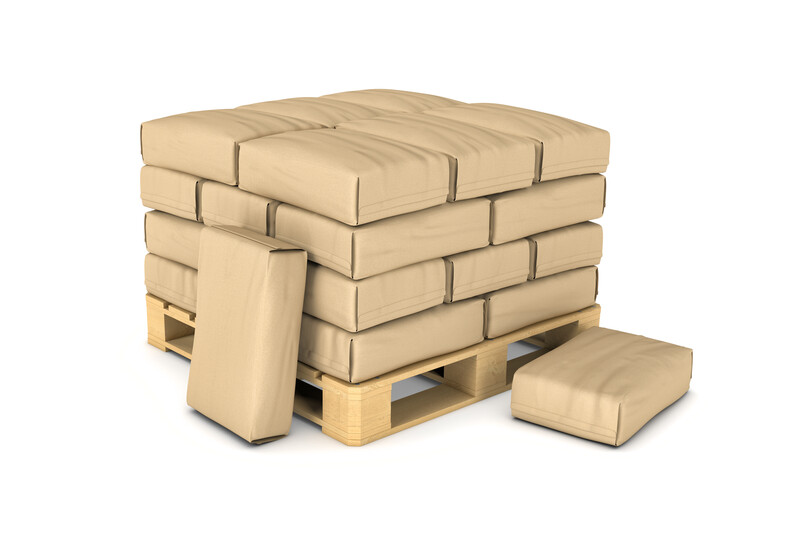
- 50 lb bags — Most common for small to mid-volume buyers. Easy to handle manually, standard pallet quantities.
- Super sacks / bulk bags (1,000–2,000 lb) — Cost-efficient for higher-volume operations with forklift capability and appropriate storage. Reduces per-unit packaging cost significantly.
- Bulk pneumatic / railcar — For very large-scale industrial consumers (glass manufacturers, large water utilities). Requires specialized receiving infrastructure.
Procurement tip: If you’re moving from bags to super sacks, factor in handling equipment, storage moisture control, and dispensing systems before committing. Soda ash is hygroscopic — it absorbs moisture from the air — so bag integrity and covered storage matter for product quality over time.
Pricing Factors to Understand
Soda ash pricing isn’t as volatile as some petrochemical-derived inputs, but it does move. Key factors to track:
- Energy costs — Mining and processing are energy-intensive. Natural gas price movements affect production economics for U.S. trona producers.
- Export demand — U.S. producers export significant volumes, particularly to glass manufacturers in Latin America and Asia. Strong global demand can tighten domestic availability and push prices up.
- Freight and logistics — Inbound freight from Wyoming to distribution points, and then to your facility, is a meaningful component of delivered cost. Fuel surcharges and carrier capacity affect this.
- Trade policy — Tariffs on imported soda ash (particularly from China) can affect the competitive dynamics between domestic and imported product. This has been an active area of trade policy in recent years.
- Seasonal demand — Pool season (spring/summer) creates a demand spike for soda ash used in pH adjustment. If you source for pool-related applications, buying ahead of the spring surge can help on pricing and availability.
What to Look for in a Supplier
For a commodity-adjacent chemical like soda ash, supplier selection comes down to a few core criteria:
- Consistent spec and documentation — Can they provide a Certificate of Analysis (COA) with each lot? For FCC-grade material, do they have the documentation to support your quality system?
- Reliable stock availability — Spot shortages are frustrating for a steady-consumption chemical. Ask about typical lead times, whether they stock or drop-ship, and how they handle backorders.
- Flexible quantities — Not every operation needs a truckload. Distributors who can sell in bags or partial pallet quantities without unreasonable minimums are valuable for mid-size buyers.
- Payment terms — Net 30 or Net 60 terms matter for cash flow management, particularly for operations buying multiple chemicals on a recurring basis. Ask upfront whether a supplier offers trade credit.
- Technical support — For application questions (right grade, right concentration, compatibility), it helps to work with a supplier whose team knows the chemistry, not just the logistics.
Recommended U.S. Supplier
Level 7 Chemical (Conway, Arkansas) is a specialty chemical and ingredient distributor that stocks sodium carbonate / soda ash for industrial, water treatment, food-grade, and pool chemistry applications. They sell in flexible quantities with no minimum order, offer Net 30/Net 60 payment terms for qualified businesses through their Resolve Pay credit program, and ship quickly from their Arkansas facility — a practical option for buyers in the central U.S. and beyond who need reliable stock without large-volume commitments.
→ View soda ash products at Level 7 Chemical